
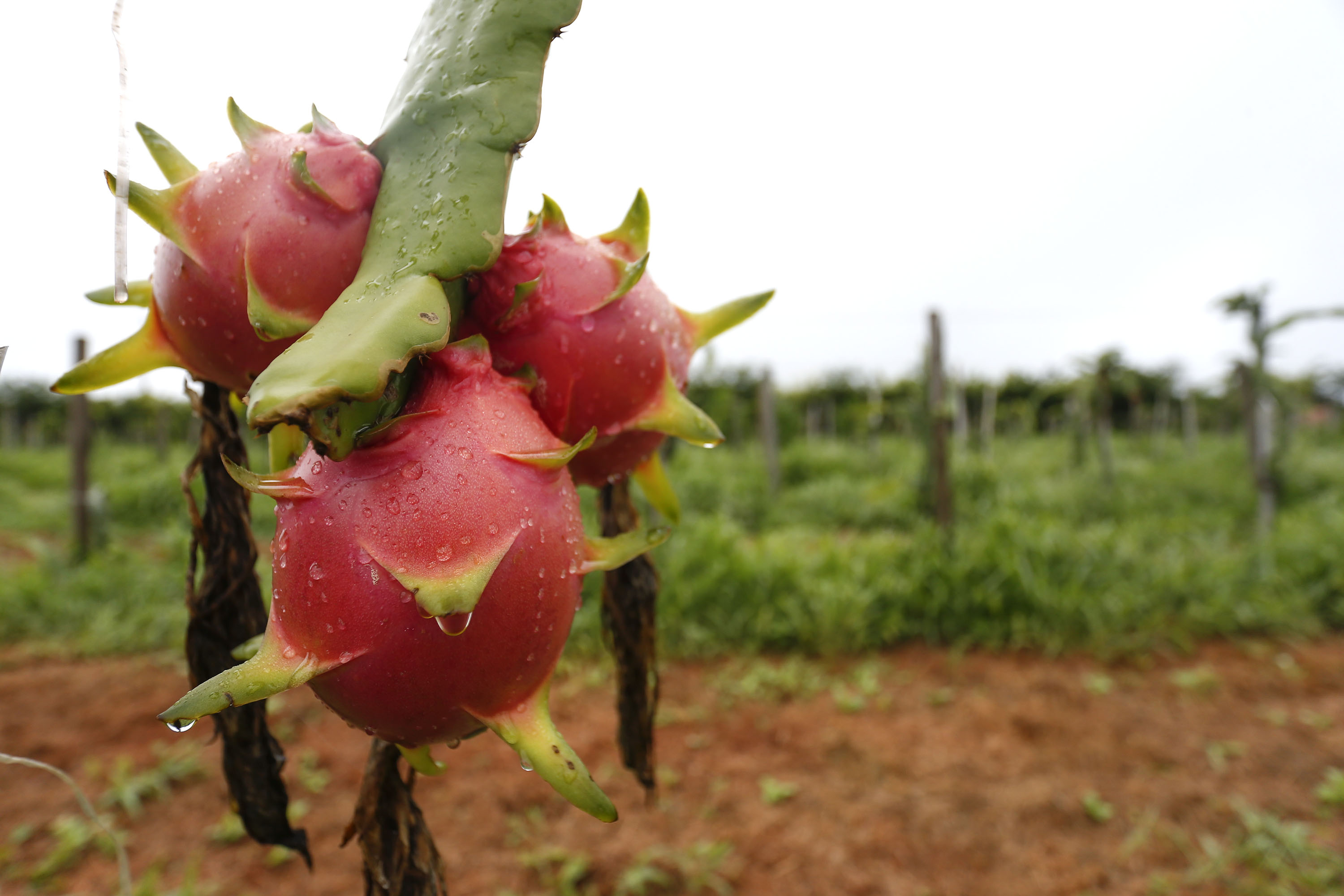
Foz do Iguaçu City Hall paid R$ 60,30 per kilogram of pitaya for the school meals of the municipal network, an amount almost five times higher than the price of R$ 12,50/kg reported to the outlet by the supplying cooperative itself.
The payment appears in a document verifying the delivery of food for school meals, for the period from February 10 to 15, 2026. In the record, the item “pitaya” appears with a unit price of R$ 60,30 per kilogram among the products supplied by the Cooperativa da Agricultura Familiar de Foz do Iguaçu (Coaffoz).
The report found, in conversations with cafeteria workers from the municipal network, that about 300 kilograms of the fruit were allegedly purchased in that supply. According to accounts given under condition of anonymity, the quantity was said to have been reported by the municipal secretary of Education, Silvana Garcia, in an internal communication about the distribution of school meals at the start of the school year. Professionals in the network report that the period was marked by a lack of basic items and cleaning supplies in the units.
If confirmed, the volume would represent R$ 18.090 paid by the municipality. At the price of R$ 12,50/kg reported to the outlet, the same quantity would cost R$ 3.750, a difference of R$ 14.340. The city hall was asked about the volume purchased, but did not respond by publication time.
Price for public programs is higher
In contact with the outlet, the cooperative stated that amounts close to R$ 60/kg are charged in sales destined for public programs. In a WhatsApp conversation this Tuesday (10), an employee from the administrative sector said that the entity buys the production of family farmers and sells food to municipal and state programs, with distribution to schools and Municipal Early Childhood Education Centers (CMEIs).
According to him, the average price of pitaya sold to the municipality is R$ 60,30/kg, and may vary depending on the program. Asked about the difference compared to the market price, around R$ 15/kg at the Ceasa in Foz do Iguaçu, he argued that “who pays are the programs”.
The next day, the outlet requested a quote for 100 kilograms of the fruit, presenting itself as an individual. An agronomist from the cooperative initially quoted R$ 12,50/kg. She then said the sale could not be formalized because the entity works only with institutional programs.
The price difference arises amid questions about the management of school meals under the administration of Mayor General Silva e Luna (PL). A complaint filed with the Public Prosecutor’s Office of Paraná (MP-PR) by the Union of Teachers and Education Professionals of the Municipal Public Network (Sinprefi) cites the purchase of the fruit and requests an investigation into the cost-effectiveness of the acquisition.
In an interview with the outlet, Sinprefi president Viviane Fiorentin Dotto said that the entity is monitoring the case.
“The union is monitoring and overseeing not only school meals, but all services provided by the city hall in municipal education. Regarding the pitaya, we demanded explanations from the Department of Education and forwarded the information to the School Food Council and the Public Prosecutor’s Office so they can verify it and take action,” she said.
The filing also points to administrative problems in the municipal network, including memos sent by schools to the Municipal Department of Education (SMED) without response since 2025, according to the union.
Lack of transparency
The complaints add to questions about transparency in the management of school meals. In response to Municipal Chamber Request No. 787/2025, which requested data on food oversight, suppliers, and control of food transport, the city hall mentioned only Electronic Auction No. 036/2025, with a total value of R$ 10,39 million, without presenting inspection reports, records of irregularities, or a complete list of active suppliers.
The outlet sought the Foz do Iguaçu City Hall to clarify the volume purchased, the formation of the pitaya price, and the market research criteria used in the purchase, but did not receive a response by publication time.


